
How to Improve Email Deliverability in 2026 (And Actually Land in the Inbox)
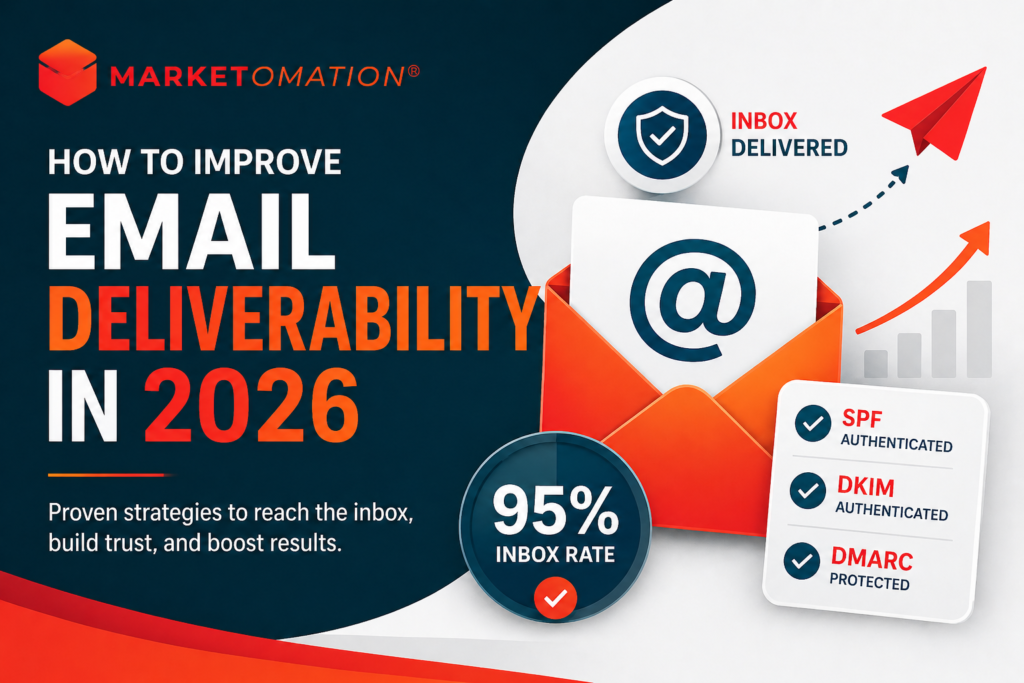
Email marketing is still one of the highest-ROI channels available—but only if your emails actually get delivered. In 2026, inbox providers are smarter, stricter, and far less forgiving. If your emails aren’t properly authenticated, engaged with, and optimized, they’ll quietly disappear into spam folders—or worse, never be delivered at all.
This guide breaks down exactly how to improve email deliverability in 2026 using modern best practices, technical setup, and automation strategies that keep your messages where they belong: in the inbox.
Why Email Deliverability Matters More Than Ever
Deliverability is no longer just about avoiding spam triggers—it’s about building trust with inbox providers like Gmail, Outlook, and Apple Mail.
In 2026, these platforms evaluate:
- Sender reputation
- Domain authentication
- Engagement signals (opens, clicks, replies)
- Sending consistency
- User behavior (deletes, spam reports, ignores)
If your emails don’t meet these standards, your campaigns won’t perform—no matter how good your copy is.
1. Set Up Proper Email Authentication (Non-Negotiable)
If you skip this step, nothing else matters.
You must configure:
- SPF (Sender Policy Framework) – verifies sending servers
- DKIM (DomainKeys Identified Mail) – ensures message integrity
- DMARC (Domain-based Message Authentication) – enforces policy and reporting
2026 Standard:
- DMARC policy set to p=quarantine or p=reject
- Alignment between your sending domain and “From” address
- Monitoring reports regularly
💡 Pro tip: Use a dedicated sending domain (e.g., mail.yourdomain.com) instead of your root domain to protect your brand.
2. Warm Up Your Domain and IP Properly
If you’re sending from a new domain or ramping up volume, you can’t go from 0 to 10,000 emails overnight.
Inbox providers flag sudden spikes as suspicious behavior.
Best Practice:
- Start with low daily volume (50–100 emails)
- Gradually increase over 2–4 weeks
- Send to your most engaged users first
Automation platforms (like those powered by MarketOmation strategies) can simulate natural sending behavior to build trust faster.
3. Clean Your Email List (More Than You Think)
Your list quality matters more than your list size.
Remove:
- Inactive subscribers (no engagement in 60–90 days)
- Hard bounces
- Spam traps
- Purchased or scraped contacts (never use these)
Implement:
- Double opt-in
- Regular list hygiene automation
- Re-engagement campaigns before removal
A smaller, highly engaged list will outperform a large, unresponsive one every time.
4. Optimize for Engagement Signals
Inbox providers track how users interact with your emails.
Positive Signals:
- Opens
- Clicks
- Replies
- Moving emails to primary inbox
Negative Signals:
- Deleting without opening
- Marking as spam
- Ignoring repeatedly
How to Improve Engagement:
- Write human, conversational subject lines
- Personalize content using behavior and tags
- Segment your audience (don’t blast everyone)
- Include clear, relevant CTAs
5. Stop “Batch Blasting”—Use Smart Sending
Sending one generic email to your entire list is outdated and harmful.
In 2026, you should:
- Use behavioral triggers (actions, clicks, visits)
- Send based on time zones and user habits
- Stagger sends instead of blasting all at once
This mimics natural communication patterns—something inbox algorithms reward.
6. Monitor Your Sender Reputation
Your sender reputation is like a credit score for email.
Track:
- Bounce rate (keep under 2%)
- Spam complaint rate (keep under 0.1%)
- Open and click rates
- Blacklist status
Tools to Use:
- Google Postmaster Tools
- Microsoft SNDS
- Third-party monitoring platforms
If your reputation drops, your deliverability drops with it—fast.
7. Avoid Spam Triggers (But Don’t Obsess)
Spam filters are smarter now—they focus less on keywords and more on behavior.
Still, avoid:
- Excessive ALL CAPS or !!!!
- Misleading subject lines
- Image-only emails
- Broken HTML
Focus on authenticity over “gaming the system.”
8. Use a Consistent Sending Schedule
Consistency builds trust.
If you send sporadically or disappear for months and suddenly return with a heavy campaign, inbox providers will treat you as risky.
Best Practice:
- Maintain a predictable cadence (weekly, bi-weekly, etc.)
- Gradually scale volume
- Keep engagement steady over time
9. Make Unsubscribing Easy (Yes, Really)
This seems counterintuitive—but hiding your unsubscribe link increases spam complaints.
And spam complaints hurt deliverability far more than unsubscribes.
Do this instead:
- Include a clear unsubscribe link
- Offer preferences (frequency, topics)
- Respect user choices immediately
10. Leverage Automation the Right Way
Automation is not just about efficiency—it’s about deliverability.
When done right, automation:
- Sends relevant messages at the right time
- Improves engagement signals
- Reduces spam complaints
- Builds long-term sender reputation
High-Impact Automations:
- Welcome sequences
- Behavior-based follow-ups
- Re-engagement flows
- Lead nurturing campaigns
Final Thoughts
Improving email deliverability in 2026 isn’t about hacks—it’s about building a system that prioritizes trust, relevance, and consistency.
If you focus on:
- Clean data
- Strong authentication
- Smart automation
- Real engagement
…your emails won’t just get delivered—they’ll get opened, read, and acted on.
At MarketOmation, we specialize in building automation systems that don’t just send emails—they ensure they perform. Because in today’s landscape, deliverability isn’t optional—it’s foundational.