

Creating a Spring Marketing Promo With Automation
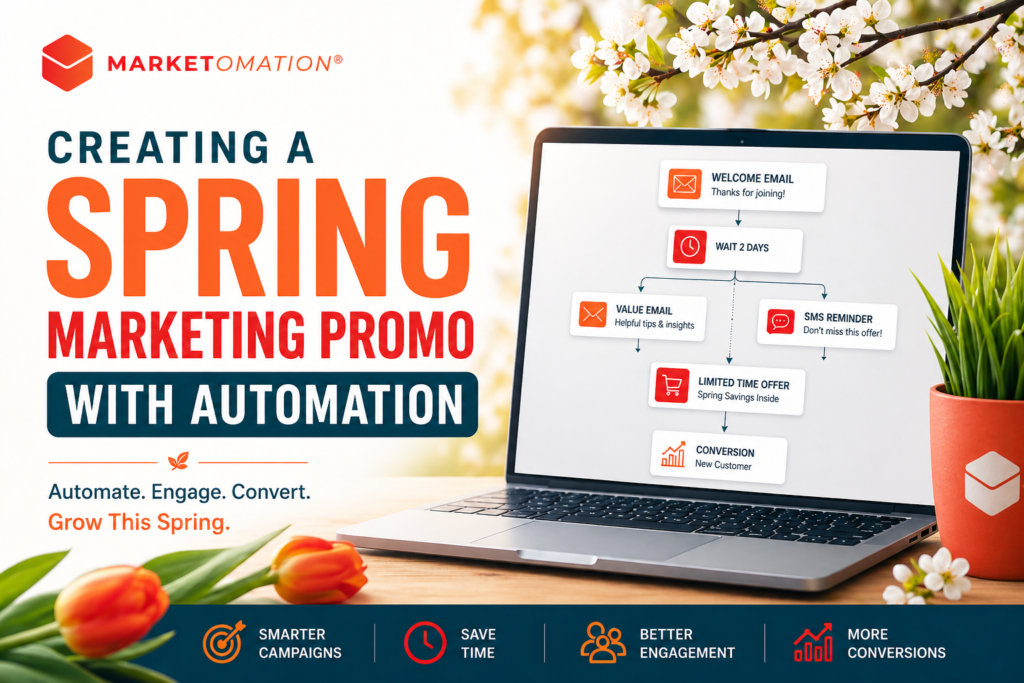
Spring is more than a season—it’s a psychological reset. Buyers are emerging from winter routines, budgets are refreshing, and attention is shifting toward growth, renewal, and new opportunities.
For marketers, this creates a narrow but powerful window to capture demand.
The problem? Most spring promotions are rushed, manually executed, and difficult to scale.
The solution is automation.
In this guide, we’ll break down how to create a spring marketing promotion powered by automation—so you can increase conversions, reduce workload, and deliver a more personalized customer experience.
Why Spring Promotions Work So Well
Spring campaigns consistently outperform because they align with natural behavioral shifts:
- Increased consumer optimism and spending intent
- Seasonal business planning cycles (especially B2B)
- Desire for “fresh starts” and upgrades
- Higher engagement across email and social platforms
But capturing that demand requires timing, consistency, and relevance—three things automation excels at.
Step 1: Define the Campaign Objective
Before building anything, clarify what your spring promotion is designed to achieve.
Common objectives include:
- Lead generation (top-of-funnel growth)
- Product or service sales
- Re-engagement of inactive leads
- Upselling existing customers
Your objective determines your funnel structure, messaging, and automation logic.
Example:
If your goal is lead generation, your campaign might center around a spring-themed downloadable resource or limited-time offer.
Step 2: Build a Simple Promotional Funnel
A high-performing spring promotion doesn’t need to be complex. It needs to be intentional.
At minimum, your automated funnel should include:
- Landing Page
- Clear seasonal hook (“Spring Growth Offer”, “Q2 Kickstart”)
- Focused CTA
- Minimal distractions
- Lead Capture Form
- Collect only essential information
- Use conditional logic if needed
- Thank You Page
- Deliver the offer
- Introduce the next step (upsell, booking, or content)
- Follow-Up Sequence
- Email or SMS automation
- Timed messages that reinforce urgency and value
Automation ensures every lead experiences this journey without manual intervention.
Step 3: Create a Seasonal Messaging Angle
Your campaign shouldn’t just exist in spring—it should feel like spring.
Strong seasonal positioning includes:
- Language around renewal, growth, and momentum
- Visuals with lighter colors and fresh design elements
- Time-bound urgency tied to the season
Weak: “Get 20% off our services”
Strong: “Spring Into Growth: Get 20% Off Before Q2 Begins”
Automation allows you to consistently deliver this messaging across all touchpoints—email, SMS, landing pages, and retargeting ads.
Step 4: Automate Your Email & SMS Sequences
This is where most of the leverage comes from.
Instead of manually following up, build a structured sequence:
Example Spring Promo Sequence:
Day 0 – Immediate Delivery
- Deliver the offer
- Reinforce the value
- Set expectations
Day 2 – Education
- Share insights or results tied to your offer
- Build trust
Day 4 – Social Proof
- Testimonials or case studies
Day 6 – Urgency
- Reminder of limited-time promotion
Day 8 – Final Call
- “Last chance” messaging
You can layer in SMS for high-intent leads to increase conversion rates.
Automation ensures no lead falls through the cracks—and every touchpoint is timed strategically.
Step 5: Use Behavioral Triggers for Personalization
Basic automation sends the same message to everyone.
Advanced automation adapts based on behavior.
Examples:
- If a lead clicks but doesn’t purchase → trigger a follow-up offer
- If a user visits the pricing page → send a targeted email
- If a lead is inactive → move them to a re-engagement sequence
This type of conditional logic transforms your spring promotion from a broadcast campaign into a responsive system.
Step 6: Add a Limited-Time Incentive
Spring promotions perform best when urgency is clear and credible.
Effective incentives include:
- Limited-time discounts
- Bonus add-ons
- Exclusive access
- Early Q2 pricing
Automation reinforces urgency through:
- Countdown emails
- Deadline reminders
- Expiring links or offers
The key is consistency—your system should continuously communicate that the opportunity is time-sensitive.
Step 7: Track, Optimize, and Scale
Once your campaign is live, automation gives you something manual campaigns don’t: data at scale.
Monitor:
- Conversion rates (landing page → lead → sale)
- Email open and click rates
- Drop-off points in your funnel
- Revenue per lead
Use this data to:
- Adjust messaging
- Improve timing
- Optimize offers
A well-built spring promotion doesn’t just perform once—it becomes a repeatable asset you can refine year after year.
Common Mistakes to Avoid
Even strong campaigns fail when execution is inconsistent.
Watch for:
- Overcomplicated funnels that slow down deployment
- Generic messaging that ignores the seasonal angle
- Lack of follow-up automation
- No clear deadline or urgency
- Failure to segment or personalize
Automation is only effective when it’s intentional.
Final Thoughts
A spring marketing promotion shouldn’t feel like a scramble—it should operate like a system.
When you combine seasonal strategy with automation, you create a campaign that:
- Runs consistently
- Scales efficiently
- Converts more effectively
At MarketOmation, the focus is on building marketing systems that don’t just launch campaigns—but sustain growth. Spring is the perfect opportunity to implement automation that works long after the season ends.