

Why Your Business Needs a Content Ecosystem in 2026
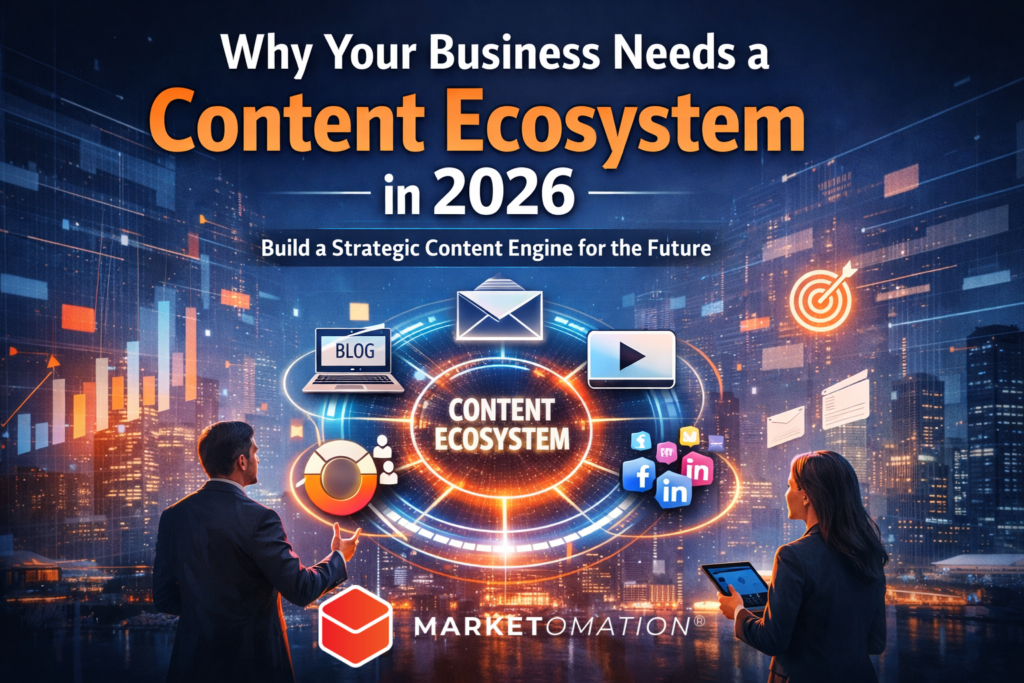
In 2026, content marketing is no longer about “posting consistently.” It’s about building an integrated content ecosystem that fuels visibility, authority, lead generation, and automated revenue.
If your content strategy still revolves around isolated blog posts, sporadic social media updates, or disconnected email campaigns, you’re leaving significant growth on the table.
Let’s break down what a content ecosystem actually is — and why your business needs one now more than ever.
What Is a Content Ecosystem?
A content ecosystem is a structured, interconnected system where all your content assets work together strategically.
Instead of creating content randomly, you build a centralized framework where:
- Blog posts feed email sequences
- Emails drive traffic to offers
- Social posts promote cornerstone content
- Videos support blog SEO
- Lead magnets convert traffic into subscribers
- Automations nurture prospects into customers
Every asset has a defined role. Every piece supports another.
It’s not just content creation.
It’s content orchestration.
Why 2026 Demands a Content Ecosystem
1. Algorithms Reward Authority, Not Activity
Search engines and social platforms now prioritize topical authority over volume. Publishing 100 random articles won’t outperform a structured content hub focused on a specific problem set.
A content ecosystem allows you to:
- Build content clusters around core topics
- Internally link strategically
- Establish semantic authority
- Increase dwell time and engagement
This improves rankings, visibility, and long-term discoverability.
2. Buyers Require More Touchpoints
The modern buyer journey is longer and more complex. Prospects consume:
- Blog posts
- Videos
- Emails
- Case studies
- Social proof
- Comparison content
Before making a decision.
Without a connected ecosystem, those touchpoints feel fragmented.
With an ecosystem, each interaction feels intentional and progressive — guiding prospects through awareness, consideration, and conversion seamlessly.
3. Paid Traffic Is More Expensive
Ad costs continue rising across platforms. Businesses that rely solely on paid acquisition face shrinking margins.
A content ecosystem builds:
- Organic traffic
- Retargeting audiences
- Evergreen email assets
- Long-term SEO equity
Instead of paying for every click, your content becomes a compounding asset.
4. AI Has Increased Content Volume — But Not Strategy
In 2026, AI can generate content instantly. But most businesses use it to create more noise, not more leverage.
The competitive advantage isn’t AI-generated content.
It’s strategic content architecture.
When AI supports a defined ecosystem — blog pillars, lead magnets, nurture flows, and automated follow-up — it becomes a force multiplier instead of just a productivity tool.
The 5 Core Components of a High-Performing Content Ecosystem
To build a scalable system, focus on these foundational layers:
1. Cornerstone Content (Pillar Assets)
These are comprehensive, SEO-driven resources that target high-value keywords in your niche.
Examples:
- Ultimate guides
- Deep educational posts
- Industry frameworks
- Comparison articles
They act as your authority anchors.
2. Content Clusters
Supporting articles expand on subtopics within your pillar themes.
For example:
- Pillar: Marketing Automation Strategy
- Cluster: Lead scoring models
- Cluster: Multi-step nurture sequences
- Cluster: CRM integration best practices
This strengthens search visibility and topical authority.
3. Lead Capture Infrastructure
Traffic without conversion is wasted.
Your ecosystem must include:
- Strategic opt-in forms
- Targeted lead magnets
- Segmented entry points
- Conversion-focused landing pages
Every major content asset should connect to a relevant offer.
4. Automated Nurture Sequences
Once someone enters your ecosystem, automation should take over.
A well-built system includes:
- Welcome sequences
- Educational nurture flows
- Re-engagement campaigns
- Offer-based sequences
This turns passive readers into active prospects.
5. Repurposing & Distribution Engine
One pillar post should fuel:
- Social media content
- Email broadcasts
- Short-form videos
- Carousel posts
- Podcast discussions
This multiplies reach without multiplying effort.
The Real ROI of a Content Ecosystem
Businesses that implement content ecosystems typically experience:
- Increased organic traffic
- Higher conversion rates
- Lower cost per acquisition
- Improved brand authority
- Stronger email list growth
- More predictable pipeline
Why?
Because content stops being random marketing activity and becomes a systemized growth engine.
Warning Signs You Don’t Have a Content Ecosystem
If any of these apply, you likely need structural changes:
- You create content without a keyword strategy
- Your blog posts don’t link to offers
- Your emails aren’t segmented
- Social content doesn’t drive to owned assets
- You rely heavily on paid ads
- Your automation is minimal or disconnected
These are common bottlenecks — but they’re fixable.
How MarketOmation Supports Content Ecosystems
A true content ecosystem requires:
- Automation infrastructure
- Funnel logic
- CRM segmentation
- Email sequencing
- Behavioral triggers
- Conversion tracking
Without the right system, strategy collapses under complexity.
MarketOmation allows you to:
- Build multi-step automation workflows
- Connect content to funnels
- Segment leads dynamically
- Deploy AI-powered follow-up
- Track performance across the customer journey
The result?
Content that doesn’t just inform — it converts.
Final Thoughts: 2026 Belongs to System Builders
The businesses that win in 2026 won’t be the loudest.
They’ll be the most strategically structured.
A content ecosystem transforms marketing from scattered output into coordinated growth.
Instead of asking:
“What should we post this week?”
You start asking:
“How does this piece strengthen our ecosystem?”
That shift changes everything.
If you’re ready to stop creating disconnected content and start building a scalable marketing engine, it’s time to design your ecosystem intentionally.
And the right automation platform makes that possible.