

Funnel Mapping: How to Visualize Customer Journeys That Sell
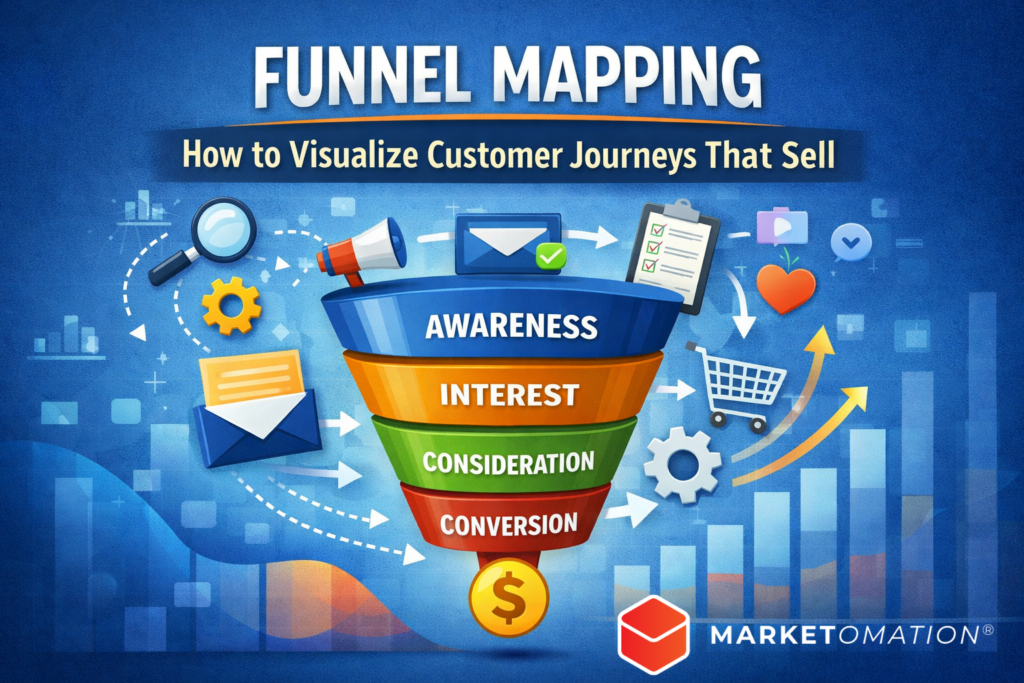
In today’s competitive digital landscape, guessing your way through marketing funnels is no longer viable. If you want consistent conversions, scalable growth, and predictable revenue, you need clarity—not just on what your funnel is, but how it actually works from the customer’s perspective.
That’s where funnel mapping comes in.
Funnel mapping is the strategic process of visually outlining every step a prospect takes—from first interaction to final purchase (and beyond). When done correctly, it transforms fragmented marketing efforts into a cohesive, conversion-focused system.
In this guide, you’ll learn how to map funnels that don’t just look good—but actually sell.
What Is Funnel Mapping?
Funnel mapping is the process of diagramming your customer journey across all touchpoints, channels, and decision points.
Instead of thinking in isolated tactics (emails, ads, landing pages), funnel mapping forces you to think in systems:
- Where does the customer enter?
- What do they see next?
- What decision are they making at each step?
- What triggers the next action?
A properly mapped funnel gives you a bird’s-eye view of your entire revenue engine.
Why Funnel Mapping Matters
Without a mapped funnel, most businesses experience:
- Disconnected marketing efforts
- Poor conversion rates
- Leaky pipelines
- Inconsistent customer experiences
With funnel mapping, you gain:
1. Clarity Across the Entire Journey
You stop guessing and start seeing exactly how users move through your funnel.
2. Higher Conversion Rates
By identifying friction points, you can systematically improve each stage.
3. Better Automation Opportunities
Mapping reveals where automation can replace manual processes and scale results.
4. Alignment Between Marketing and Sales
Everyone operates from the same blueprint, reducing inefficiencies.
The Core Stages of a High-Converting Funnel
Before mapping, you need to understand the standard funnel stages:
1. Awareness
The prospect discovers your brand.
- Channels: Ads, SEO, social media, referrals
2. Interest
They engage with your content or offer.
- Blogs, videos, lead magnets
3. Consideration
They evaluate your solution.
- Emails, webinars, case studies
4. Conversion
They take action and become a customer.
- Sales pages, checkout flows
5. Retention & Ascension
They buy again or upgrade.
- Upsells, memberships, loyalty systems
Your funnel map should clearly represent how a user transitions through each stage.
How to Map a Funnel That Actually Converts
Step 1: Define Your Entry Points
Start by identifying how people enter your ecosystem:
- Paid ads
- Organic search (SEO)
- Social media
- Email referrals
Each entry point may require its own micro-funnel, but they should all connect into a unified system.
Step 2: Identify the Primary Offer
Every funnel must be anchored by a clear conversion goal:
- Product purchase
- Booking a call
- Subscription
- Course enrollment
If your funnel tries to do too much, it will underperform. Focus on one primary outcome per funnel.
Step 3: Map the Customer Journey Step-by-Step
Now build the actual flow:
Example:
- Facebook Ad
- Landing Page
- Lead Magnet Opt-In
- Thank You Page
- Email Nurture Sequence
- Sales Page
- Checkout
- Upsell / Downsell
At each step, ask:
- What is the user thinking?
- What objection do they have?
- What action do I want them to take?
Step 4: Add Decision Points and Logic
This is where advanced funnel mapping becomes powerful.
Use conditional logic to personalize journeys:
- If user clicks → send targeted follow-up
- If user doesn’t open → resend with new subject line
- If user buys → trigger onboarding sequence
This turns your funnel from static to adaptive.
Step 5: Identify Friction and Drop-Off Points
Look for areas where users might disengage:
- Long forms
- Confusing messaging
- Too many steps
- Weak calls-to-action
Every friction point is a conversion opportunity.
Step 6: Visualize the Funnel
Use tools to map your funnel visually:
- Lucidchart
- Miro
- Figma
- Whimsical
Your map should include:
- Pages
- Traffic sources
- Email sequences
- Automations
- Decision branches
The goal is to create a clear, visual blueprint that anyone on your team can understand.
Best Practices for High-Converting Funnel Maps
Keep It Simple First
Start with a minimum viable funnel. Complexity can be layered in later.
Focus on One Audience Segment
Generic funnels convert poorly. Tailor journeys to specific customer avatars.
Align Messaging Across Every Step
Your messaging should feel seamless from first click to checkout.
Build for Mobile First
Most traffic is mobile—design accordingly.
Track Everything
Use analytics and tracking tools to validate your map in real-world performance.
Common Funnel Mapping Mistakes
Avoid these pitfalls:
- Overcomplicating the funnel too early
- Ignoring post-purchase journeys
- Lack of clear CTA at each step
- No follow-up sequences
- Designing for the business, not the customer
A funnel that looks impressive but confuses users will underperform every time.
Turning Your Funnel Map Into Revenue
A funnel map is not just a diagram—it’s a strategic asset.
Once mapped, you can:
- Build faster with fewer errors
- Optimize systematically
- Scale winning funnels
- Automate customer journeys
- Increase lifetime value
The difference between struggling businesses and scalable ones often comes down to this:
One has scattered tactics. The other has a mapped, optimized system.
Final Thoughts
Funnel mapping is the bridge between strategy and execution.
If your marketing feels inconsistent or your conversions aren’t where they should be, the problem usually isn’t effort—it’s visibility.
When you can clearly see your funnel, you can fix it.
When you can fix it, you can scale it.
And when you have the right systems and tools in place—like MarketOmation—you can turn that clarity into consistent, automated revenue.