

Conversion Psychology for Funnel Builders: How to Turn Clicks Into Customers
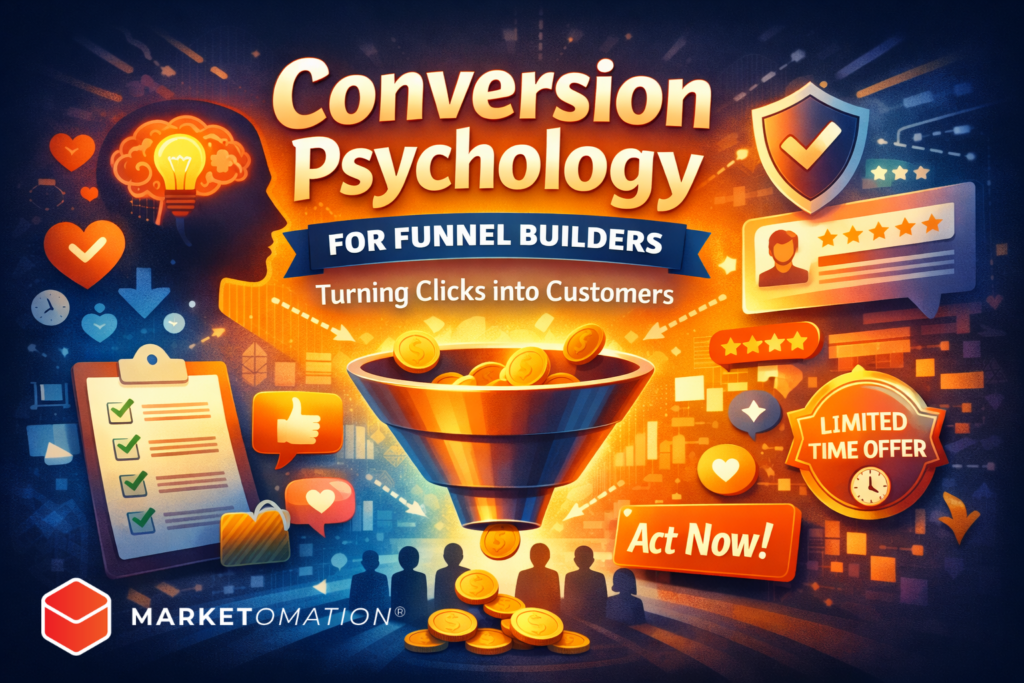
In modern funnel building, technology is no longer the differentiator—psychology is. Anyone can assemble landing pages, emails, and automations. The funnels that consistently convert are the ones designed around how humans actually make decisions.
Conversion psychology bridges behavioral science and digital marketing. For funnel builders, mastering it means creating systems that feel natural, intuitive, and persuasive—without manipulation or friction.
In this guide, we’ll break down the core psychological principles that drive conversions and show how to apply them across every stage of a modern marketing funnel.
Why Conversion Psychology Matters in Funnel Design
Most funnels fail for one simple reason: they prioritize features and structure over human behavior.
Visitors don’t move through funnels logically—they move emotionally first, then rationalize later. Conversion psychology helps you:
- Reduce cognitive friction
- Build trust faster
- Increase perceived value
- Guide decision-making without pressure
- Improve conversion rates without increasing traffic
For funnel builders using platforms like MarketOmation, this means higher ROI from the same workflows.
The 7 Core Psychological Principles Every Funnel Builder Should Use
1. Cognitive Load Reduction
People don’t want to think—they want clarity.
The brain avoids effort. Every unnecessary choice, form field, or paragraph reduces conversion probability.
How to apply it in funnels:
- One primary CTA per page
- Short, scannable copy blocks
- Progressive disclosure (reveal information only when needed)
- Automated follow-ups instead of long upfront explanations
Funnel takeaway: Simpler funnels outperform “clever” funnels every time.
2. Commitment & Consistency
Small yeses lead to big yeses.
Once someone takes a small action, they are psychologically primed to take the next one.
How to apply it:
- Start with low-friction opt-ins (quizzes, checklists, micro-commitments)
- Use multi-step forms instead of single long forms
- Trigger automations after minor actions (page views, video watches, clicks)
Funnel takeaway: Design funnels as decision sequences, not one-time asks.
3. Social Proof & Authority
People trust people—especially people like them.
Before converting, prospects subconsciously ask:
“Has this worked for someone like me?”
How to apply it:
- Testimonials matched to funnel stage
- Industry-specific case studies
- Authority indicators (logos, certifications, experience)
- Dynamic content personalization based on segment
Funnel takeaway: Social proof should be contextual, not generic.
4. Loss Aversion
People fear losing more than they desire winning.
Psychologically, the pain of loss is felt about twice as strongly as the pleasure of gain.
How to apply it:
- Highlight opportunity cost (“What happens if you don’t fix this?”)
- Use ethical scarcity (deadlines, limited access, expiring bonuses)
- Abandoned funnel reminders that reinforce what’s being missed
Funnel takeaway: Frame outcomes in terms of avoided pain, not just gained benefits.
5. Reciprocity
Give value first, earn trust second.
When someone receives genuine value, they feel an unconscious desire to reciprocate.
How to apply it:
- High-quality lead magnets that actually solve a problem
- Educational nurture sequences before pitching
- Free tools, templates, or audits inside funnels
Funnel takeaway: Funnels that educate outperform funnels that sell too early.
6. Identity Alignment
People buy who they believe they are becoming.
Conversions happen when prospects see your offer as aligned with their self-image or aspirational identity.
How to apply it:
- Language that mirrors your audience’s internal dialogue
- Positioning that reflects who the customer wants to be
- Segmentation based on role, maturity level, or goals
Funnel takeaway: Speak to identity, not demographics.
7. Trust & Risk Reversal
Uncertainty kills conversions.
Even interested prospects hesitate if they perceive risk.
How to apply it:
- Guarantees and clear expectations
- Transparent pricing and next steps
- Consistent branding across funnel assets
- Automated reassurance emails post-opt-in or post-purchase
Funnel takeaway: Every funnel stage should answer, “Is this safe and worth it?”
Applying Conversion Psychology Across the Funnel
Top of Funnel (Awareness)
- Curiosity-driven headlines
- Pattern interruption
- Low-commitment entry points
- Clear relevance to the prospect’s problem
Middle of Funnel (Consideration)
- Educational sequences
- Objection handling via automation
- Authority and proof stacking
- Behavioral segmentation
Bottom of Funnel (Decision)
- Urgency without pressure
- Risk reversal
- Clear outcomes and transformation
- Simple, distraction-free conversion paths
How Automation Enhances Conversion Psychology
Automation platforms like MarketOmation allow funnel builders to apply psychological principles at scale:
- Behavioral triggers instead of static sequences
- Dynamic personalization based on actions
- Timely follow-ups that align with intent
- Intelligent lead scoring that matches readiness
The result: funnels that feel personal, relevant, and responsive—without manual effort.
Final Thoughts: Build Funnels for Humans, Not Just Metrics
The highest-converting funnels don’t rely on hacks or tricks. They succeed because they respect how people think, feel, and decide.
When funnel builders combine:
- Conversion psychology
- Clean funnel architecture
- Smart automation
They don’t just improve conversion rates—they create better customer experiences.
If you want funnels that convert consistently in 2026 and beyond, start with psychology first—and let automation amplify it.