

End-of-Month Funnel Optimization: A Step-by-Step Guide
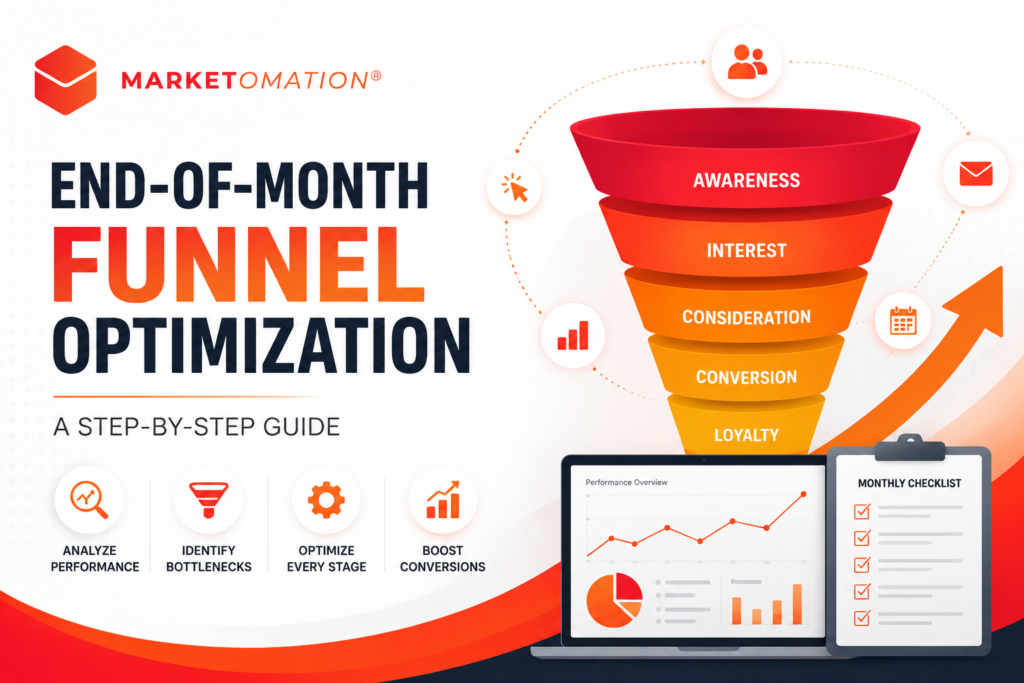
Every business wants more leads, more conversions, and more predictable revenue. But most companies leave significant money on the table because they fail to consistently optimize their sales funnel.
The end of the month is one of the most powerful times to evaluate performance, identify bottlenecks, and improve conversion rates across your marketing and sales systems.
Instead of simply reviewing reports and moving on, high-performing companies use end-of-month funnel optimization to create measurable improvements month after month.
In this guide, you’ll learn exactly how to audit, analyze, and optimize your funnel using a repeatable process that increases efficiency, improves ROI, and drives sustainable growth.
What Is Funnel Optimization?
Funnel optimization is the process of improving each stage of your customer journey to increase conversions and reduce friction.
This includes optimizing:
- Lead generation
- Landing pages
- Email campaigns
- CRM workflows
- Sales follow-up
- Appointment booking
- Offers and calls-to-action
- Customer onboarding
The goal is simple:
Move more qualified prospects through your funnel with less resistance.
When done consistently, funnel optimization improves:
- Cost per acquisition (CPA)
- Conversion rates
- Customer lifetime value (LTV)
- Marketing ROI
- Sales efficiency
Why End-of-Month Funnel Optimization Matters
Monthly optimization creates a feedback loop that helps businesses adapt quickly and scale intelligently.
Without regular funnel reviews, companies often experience:
- Lead leakage
- Rising ad costs
- Lower conversion rates
- Poor follow-up consistency
- Stagnant revenue growth
- Broken automations
- Misaligned sales and marketing teams
An end-of-month optimization process helps you:
- Catch problems early
- Improve campaign performance
- Refine messaging
- Eliminate inefficiencies
- Make data-driven decisions
Businesses using marketing automation platforms like HubSpot, GoHighLevel, ActiveCampaign, or Salesforce benefit even more because small workflow improvements can compound rapidly over time.
Step 1: Review Your Funnel Metrics
Before making changes, you need accurate data.
Start by evaluating key funnel performance indicators from the previous month.
Core Funnel Metrics to Analyze
Traffic Metrics
- Website visitors
- Landing page visits
- Traffic sources
- Bounce rate
- Time on page
Lead Metrics
- Total leads generated
- Cost per lead
- Lead source quality
- Opt-in conversion rate
Sales Metrics
- Appointment booking rate
- Sales call conversion rate
- Close rate
- Average deal value
Retention Metrics
- Customer churn rate
- Upsell performance
- Email engagement
- Repeat purchase rate
Questions to Ask
- Which traffic sources converted best?
- Where are leads dropping off?
- Which offers underperformed?
- Which campaigns generated the highest ROI?
- What stage of the funnel needs the most improvement?
Use tools like:
- Google Analytics
- HubSpot
- GoHighLevel
- ClickFunnels
- Meta Ads Manager
- Google Search Console
Document everything before making changes.
Step 2: Identify Funnel Bottlenecks
Every funnel has weak points.
Your job is to identify the stage causing the greatest revenue loss.
Common Funnel Bottlenecks
Low Landing Page Conversion Rates
Possible causes:
- Weak headline
- Poor CTA
- Slow page speed
- Too much friction
- Unclear offer
Poor Lead Quality
Possible causes:
- Incorrect targeting
- Weak ad messaging
- Broad audience segments
- Inaccurate lead magnets
Low Email Engagement
Possible causes:
- Weak subject lines
- Poor segmentation
- Over-emailing
- Irrelevant content
Low Sales Conversion Rates
Possible causes:
- Poor qualification
- Weak sales scripts
- Slow follow-up
- Misaligned expectations
Map out the funnel visually and identify where the biggest drop-offs occur.
Step 3: Audit Your Automations
Marketing automation is supposed to improve efficiency.
But broken workflows, outdated sequences, and poor triggers can quietly damage your conversions.
Automation Areas to Review
Lead Capture Workflows
Check:
- Forms
- Integrations
- CRM syncing
- Notification triggers
Email Sequences
Review:
- Open rates
- Click-through rates
- Unsubscribes
- Timing intervals
CRM Pipelines
Verify:
- Deal stages
- Automation rules
- Task assignments
- Follow-up reminders
SMS & Appointment Workflows
Ensure:
- Confirmation texts work
- Reminder sequences fire correctly
- Calendars sync properly
Common Automation Problems
- Duplicate leads
- Delayed follow-up
- Broken integrations
- Incorrect tagging
- Dead links
- Trigger conflicts
Even one broken automation can cost thousands in lost revenue.
Step 4: Optimize Your Landing Pages
Landing pages are often the highest-impact area for quick conversion gains.
Small improvements can produce major results.
Landing Page Optimization Checklist
Improve Headlines
Your headline should:
- Address a specific pain point
- Offer a clear outcome
- Create curiosity or urgency
Example:
Instead of:
“Marketing Solutions for Businesses”
Use:
“Automate Your Marketing Funnel and Increase Conversions by 30%”
Strengthen Your CTA
Good CTAs are:
- Action-oriented
- Specific
- Benefit-driven
Examples:
- Book Your Strategy Call
- Get the Free Funnel Audit
- Start Automating Today
Reduce Friction
Simplify:
- Forms
- Navigation
- Checkout steps
- Page clutter
Add Social Proof
Include:
- Testimonials
- Case studies
- Client logos
- Reviews
- Metrics and outcomes
Improve Mobile Experience
More than half of users visit from mobile devices.
Ensure:
- Fast load speeds
- Easy navigation
- Responsive layouts
- Clear CTA buttons
Step 5: Refine Your Email Marketing
Email remains one of the highest ROI marketing channels available.
Monthly optimization is essential.
Email Optimization Areas
Subject Lines
Test:
- Curiosity-based headlines
- Personalized subjects
- Benefit-driven wording
Segmentation
Segment users by:
- Behavior
- Industry
- Funnel stage
- Purchase history
Personalization
Use:
- First names
- Behavioral triggers
- Dynamic content
- Personalized offers
CTA Placement
Improve:
- Button visibility
- Message clarity
- Offer relevance
Email Metrics to Monitor
- Open rates
- Click-through rates
- Conversion rates
- Reply rates
- Unsubscribes
A healthy email system nurtures leads consistently without overwhelming them.
Step 6: Improve Lead Nurturing
Most leads are not ready to buy immediately.
A strong nurturing system builds trust and moves prospects toward conversion over time.
Effective Lead Nurturing Strategies
Educational Content
Provide:
- Blog articles
- Case studies
- Webinars
- Guides
- Industry insights
Retargeting Campaigns
Reconnect with:
- Website visitors
- Cart abandoners
- Unbooked leads
- Past customers
Multi-Channel Follow-Up
Use:
- SMS
- Phone calls
- LinkedIn outreach
- Retargeting ads
Consistency is critical.
Step 7: Align Marketing and Sales
One of the biggest funnel leaks happens between marketing and sales.
If these teams are misaligned, conversions suffer.
Questions to Review Monthly
- Are leads properly qualified?
- Is sales receiving enough context?
- Are follow-up times fast enough?
- Are objections being documented?
- Is marketing attracting the right audience?
Create a Feedback Loop
Sales teams should share:
- Common objections
- High-performing messaging
- Lead quality insights
- Conversion blockers
Marketing should use this information to improve campaigns and targeting.
Step 8: A/B Test Key Funnel Elements
Optimization without testing is guessing.
Every month, test at least one variable in your funnel.
High-Impact Funnel Tests
Landing Pages
Test:
- Headlines
- CTA colors
- Form length
- Video vs. static image
Emails
Test:
- Subject lines
- CTA placement
- Send times
- Personalization
Ads
Test:
- Creative
- Hooks
- Offers
- Audiences
Sales Scripts
Test:
- Opening questions
- Offer framing
- Closing language
Track results carefully and implement winning variations.
Step 9: Analyze Customer Behavior
Understanding how users interact with your funnel reveals hidden optimization opportunities.
Tools for Behavioral Analysis
Use:
- Heatmaps
- Session recordings
- Scroll tracking
- Click maps
Popular tools include:
- Hotjar
- Microsoft Clarity
- Crazy Egg
Look for:
- Rage clicks
- Abandonment points
- Confusing navigation
- Low-engagement sections
Behavioral data often uncovers issues that analytics alone cannot reveal.
Step 10: Build a Monthly Funnel Optimization Process
Consistency creates growth.
The best companies don’t optimize once — they optimize continuously.
Monthly Funnel Optimization Workflow
Week 1
- Review the previous month’s data
- Identify bottlenecks
Week 2
- Update landing pages
- Improve messaging
- Adjust automations
Week 3
- Launch A/B tests
- Refine campaigns
Week 4
- Analyze test results
- Document insights
- Prepare next month’s improvements
Over time, small incremental gains compound into significant revenue growth.
Common Funnel Optimization Mistakes
Avoid these costly errors:
Making Too Many Changes at Once
You won’t know what improved performance.
Ignoring Mobile Users
Mobile optimization is no longer optional.
Overcomplicating Automation
Complex workflows can become fragile and difficult to manage.
Focusing Only on Traffic
More traffic does not always mean more revenue.
Neglecting Follow-Up Speed
Fast follow-up dramatically increases conversion rates.
Final Thoughts
End-of-month funnel optimization is one of the highest-leverage growth activities for modern businesses.
By consistently reviewing data, improving automation, refining messaging, and optimizing conversion points, companies can dramatically improve performance without increasing ad spend.
The businesses that scale most effectively are not always the ones spending the most money.
They are the ones optimizing their systems most consistently.
If you want predictable growth, stronger conversions, and better marketing ROI, build funnel optimization into your monthly business operations.
Ready to Optimize Your Funnel?
At MarketOmation, we help businesses automate marketing, optimize funnels, and scale growth through intelligent systems and data-driven strategies.
Whether you need:
- Funnel automation
- CRM optimization
- Lead nurturing systems
- Conversion optimization
- Marketing workflows
- AI-powered automation
Our team can help you build a scalable growth engine.