

How to Convert a Blog Reader Into a Paying Customer
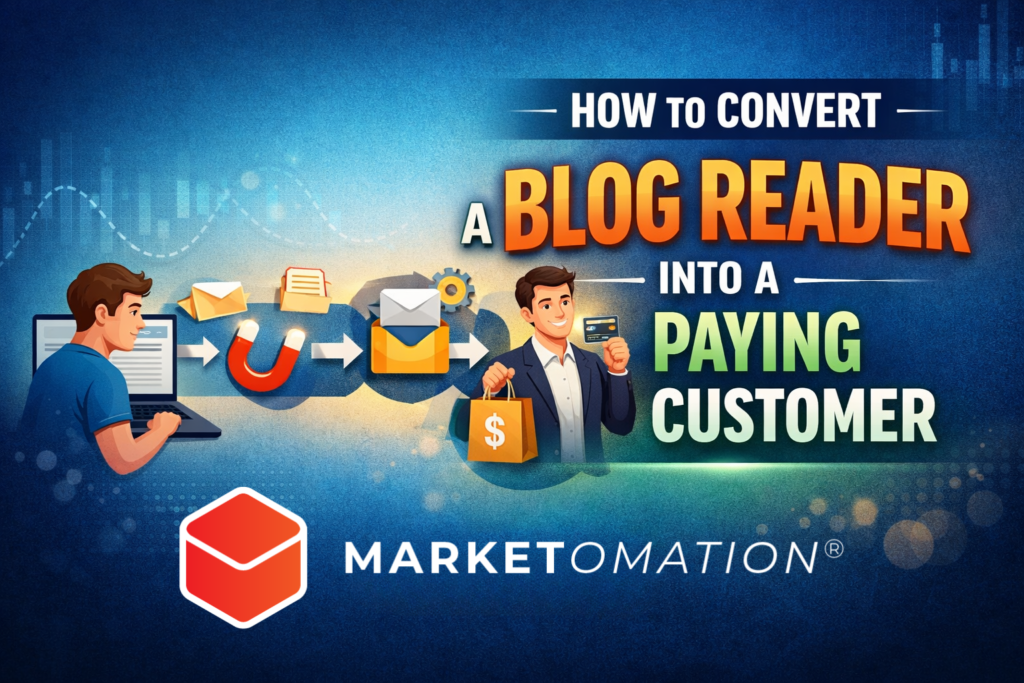
Driving traffic to your blog is only half the equation. The real ROI comes when those readers convert into paying customers. Yet most businesses stop at publishing content—missing the critical systems that transform passive readers into engaged buyers.
The difference? Intentional funnel design, strategic automation, and conversion-focused content.
In this guide, we’ll break down exactly how to convert blog readers into paying customers using proven marketing automation principles.
1. Start With Strategic Content (Not Just Traffic)
Not all blog traffic converts—and that’s by design.
If your content isn’t aligned with buyer intent, you’ll attract readers who consume but never purchase.
What high-converting blogs do differently:
- Target problem-aware and solution-aware audiences
- Focus on specific outcomes, not generic education
- Naturally lead into a next step
Example:
Instead of:
“What Is Marketing Automation?”
Use:
“5 Marketing Automation Workflows That Generate Sales While You Sleep”
Why it works: It attracts readers closer to a buying decision.
2. Use Content Upgrades to Capture Leads
A blog reader is anonymous. A lead is an opportunity.
You must convert readers into leads before you can convert them into customers.
High-converting lead magnets include:
- Checklists
- Templates
- Swipe files
- Mini-courses
- Automation recipes
Key principle:
Your offer should be a natural extension of the blog topic.
Example:
- Blog: “How to Build a Sales Funnel”
- Lead Magnet: “Done-For-You Funnel Blueprint (PDF + Automation Map)”
3. Place CTAs Strategically (Not Randomly)
Most blogs either:
- Have no CTA
- Or rely on a single generic one
That’s a major leak.
High-performing blogs use:
- Inline CTAs (within the content)
- Mid-post offers
- Exit-intent popups
- Sticky headers or bars
CTA Best Practices:
- Focus on one primary action
- Use benefit-driven language
- Reduce friction (no long forms)
Example CTA:
“Download the exact automation system that turns blog readers into clients.”
4. Build a Nurture Sequence That Sells
Once someone opts in, the real conversion process begins.
This is where most businesses fail—they collect leads but don’t nurture them effectively.
Your email sequence should:
- Deliver immediate value
- Build trust and authority
- Shift beliefs
- Present a clear offer
Simple 5-email structure:
- Delivery + Quick Win
- Authority + Case Study
- Problem Agitation
- Solution Introduction
- Offer + Call to Action
Automation ensures every lead experiences this journey consistently.
5. Use Behavioral Triggers to Increase Conversions
Not all leads are equal. Some are ready now.
Behavior-based automation allows you to:
- Track clicks
- Monitor page visits
- Trigger offers based on engagement
Examples:
- Visited pricing page → send sales email
- Clicked offer link → trigger urgency sequence
- Watched webinar → follow-up with tailored pitch
This is where platforms like MarketOmation create exponential leverage.
6. Create a Clear Offer Path
Confusion kills conversions.
Your blog should lead readers toward one logical next step, not multiple competing options.
Avoid:
- Too many links
- Multiple offers
- Unclear outcomes
Instead:
Create a conversion pathway:
Blog → Lead Magnet → Email Sequence → Offer
Every step should feel like the natural continuation of the last.
7. Optimize for Trust and Credibility
People don’t buy because they understand—they buy because they trust.
Increase conversions with:
- Testimonials
- Case studies
- Data-backed results
- Personal stories
- Authority positioning
Even a simple line like:
“Used by 500+ business owners to automate their sales systems”
…can significantly increase conversion rates.
8. Reduce Friction at Every Step
Every extra click, form field, or confusion point reduces conversions.
Simplify:
- Opt-in forms (name + email max)
- Checkout process
- Messaging clarity
Ask yourself:
“How easy is it for someone to say yes right now?”
If it’s not frictionless, you’re losing revenue.
9. Retarget Your Blog Visitors
Most readers won’t convert on the first visit.
Retargeting keeps you top of mind.
Use retargeting ads to:
- Promote your lead magnet
- Share testimonials
- Reinforce your offer
This turns cold readers into warm prospects over time.
10. Measure, Test, and Optimize
Conversion is not a one-time setup—it’s an ongoing process.
Track key metrics:
- Opt-in rate
- Email open/click rates
- Conversion rate to sale
- Funnel drop-off points
Then optimize:
- Headlines
- CTAs
- Lead magnets
- Email sequences
Small improvements compound into major revenue gains.
Conclusion
Turning blog readers into paying customers isn’t about luck—it’s about system design.
When you combine:
- Strategic content
- Intentional lead capture
- Automated nurturing
- Clear offers
…your blog becomes more than content—it becomes a revenue engine.
If your blog isn’t converting yet, the issue isn’t traffic—it’s the funnel behind it.
Final Thought
The businesses that win aren’t the ones with the most content—they’re the ones with the best conversion systems.
And that’s exactly what MarketOmation is built to help you create.