

Re-Engagement Campaigns That Revive “Dead” Leads
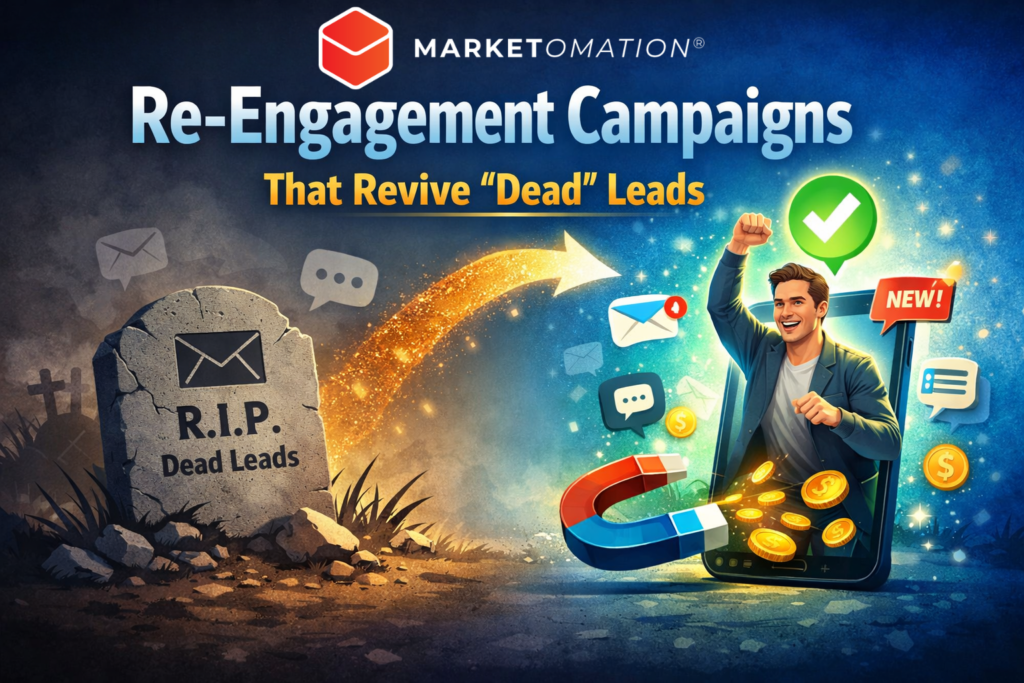
Most “dead” leads aren’t dead at all. They’re just disengaged.
In modern funnels, leads go cold not because they lack interest—but because timing, relevance, or follow-up failed. The good news? With the right re-engagement campaigns, you can revive dormant leads, recover lost revenue, and turn silence into conversions—automatically.
In this article, we’ll break down what actually works in re-engagement, why traditional “blast emails” fail, and how to build intelligent campaigns inside MarketOmation that bring cold leads back to life.
What Is a Re-Engagement Campaign?
A re-engagement campaign is an automated, multi-channel sequence designed to restart conversations with leads who have:
- Stopped opening emails
- Ignored follow-ups
- Abandoned funnels or offers
- Gone inactive after opting in
Unlike generic nurture sequences, re-engagement campaigns are behavior-driven, personalized, and goal-oriented.
Their purpose is simple:
Relevance → Trust → Action
Why Leads Go “Dead” in the First Place
Understanding why leads disengage is critical to reviving them.
Common causes include:
- ❌ Over-messaging with low relevance
- ❌ No segmentation or behavior tracking
- ❌ One-size-fits-all follow-ups
- ❌ Poor timing (right offer, wrong moment)
- ❌ No clear next step
Most funnels fail not at lead capture, but at lead continuation.
The Psychology Behind Successful Re-Engagement
Re-engagement works when it taps into three core psychological drivers:
1. Pattern Interruption
A different message, format, or channel breaks autopilot behavior.
2. Cognitive Ease
Short, clear, low-commitment interactions reduce resistance.
3. Identity Re-Alignment
Messaging reminds the lead why they opted in and who they want to become.
High-Performing Re-Engagement Campaign Types
1. The “Are You Still Interested?” Reset
Simple. Honest. Effective.
Why it works:
It removes pressure and gives control back to the lead.
Example triggers:
- No opens in 30–60 days
- Funnel abandonment
- Webinar no-show
Best channels: Email + SMS follow-up
2. Value-First Content Revival
Instead of selling—teach.
Deliver:
- A quick win
- A checklist
- A short video
- A case study
This rebuilds trust before asking for action.
Pro tip: Gate nothing at this stage.
3. Objection-Focused Sequences
Dormant leads often stall due to unspoken objections.
Address them directly:
- “Too busy?”
- “Tried something similar before?”
- “Not sure this will work for you?”
Use segmentation to match objections to behavior.
4. Channel Shift Campaigns
If email failed—switch channels.
Examples:
- Email → SMS
- Email → voicemail drop
- Email → retargeting ads
MarketOmation allows multi-channel orchestration from a single automation flow.
5. Deadline-Driven Reactivation
Scarcity works—when used strategically.
Examples:
- Limited replay access
- Expiring bonus
- Seasonal relevance
Pair urgency with relevance—not pressure.
How to Build Re-Engagement Campaigns Inside MarketOmation
MarketOmation excels at re-engagement because it’s behavior-aware by design.
Step 1: Define “Inactive” by Behavior
Examples:
- No opens in 45 days
- No clicks in 30 days
- No logins / bookings
Step 2: Tag + Segment Automatically
Use dynamic tags such as:
inactive_30inactive_60cold_lead_reengage
Step 3: Trigger Smart Automation
Launch campaigns based on:
- Time-based inactivity
- Funnel exit points
- Engagement decay
Step 4: Personalize Messaging at Scale
Dynamic fields, conditional logic, and behavioral copy increase response rates.
Step 5: Measure Re-Engagement KPIs
Track:
- Re-open rates
- Click recovery
- Conversion lift
- Unsubscribe reduction
Common Re-Engagement Mistakes to Avoid
- 🚫 Restarting full nurture sequences
- 🚫 Over-incentivizing with discounts
- 🚫 Sending the same message repeatedly
- 🚫 Ignoring channel fatigue
- 🚫 Not offering an easy opt-out
Sometimes the best re-engagement move is letting uninterested leads go—clean data improves results.
When to Sunset a Lead (and Why It’s Healthy)
If a lead shows zero engagement after multiple attempts, it’s time to sunset them.
Benefits:
- Higher deliverability
- Better analytics
- Stronger segmentation
- More accurate forecasting
MarketOmation allows automated suppression and list hygiene without manual cleanup.
Final Thought: Re-Engagement Is Revenue Recovery
Re-engagement campaigns are not a “nice-to-have”—they are profit multipliers.
Every revived lead:
- Costs less than acquiring a new one
- Converts faster
- Has higher lifetime value
With intelligent automation, personalization, and behavioral triggers, “dead” leads become your most underutilized asset.
Want to Build High-Converting Re-Engagement Campaigns Automatically?
MarketOmation gives you the tools to revive leads, recover revenue, and scale follow-up—without manual work.
Explore how MarketOmation transforms cold leads into conversions.